
What is Suspension?
Suspension is a system of parts in a vehicle that connects the wheels to the chassis and absorbs shocks and vibrations, providing a smooth ride. It is a crucial component of a vehicle that helps maintain balance, handling and comfort.
There are two main types of suspension systems: independent suspension and dependent suspension.
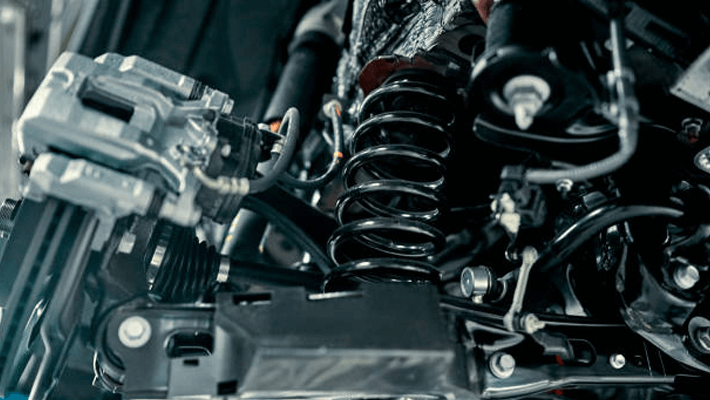
Independent suspension: This type of suspension allows each wheel to move independently of the others, helping to provide a smoother ride and better handling. It is often found in vehicles with higher performance or luxury. The most common types of independent suspension systems include double wishbones, MacPherson struts and multi-link.
Dependent suspension: This type of suspension connects the wheels on one side of the vehicle so that when one wheel hits a bump, the other wheel on that side moves as well. This type of suspension is typically found on vehicles of simpler design and is less expensive to manufacture. The most common types of dependent suspension systems are running axle, semi-elliptic leaf spring, and three-link.
The suspension system works with the vehicle’s tires and wheels to provide the best possible ride and handling. Suspension components include:
- Springs: Springs that absorb shocks and vibrations and help keep the wheels in contact with the road.
- Shock absorbers: they are designed to dampen the oscillations of the springs and help control the movement of the wheels.
- Control arms: which connect the wheels to the frame and help control the movement of the wheels.
- Stabilizer bars: help reduce body roll and maintain balance.
Regular maintenance is important to keep the suspension system in good condition; this includes checking the alignment of the wheels, checking the tires for wear, checking the condition of the bushings and ball joints, and checking the condition of the shock absorbers and struts.
How Does the Suspension System Work?
The suspension system in a vehicle is designed to absorb jolts and vibrations, providing a smooth ride and maintaining stability, handling and comfort. It works by connecting the wheels to the vehicle’s chassis, allowing them to move up and down independently of the chassis.
When a vehicle encounters a bump or other unevenness on the road surface, the wheels move up and down, compressing and depressurizing the suspension components. The suspension system works to absorb this movement and prevent it from being transmitted to the vehicle’s chassis and passengers.

The main components of a typical suspension system include:
Springs: These are designed to compress and decompress by absorbing energy from bumps and other road irregularities. There are different types of springs such as coil springs, leaf springs and torsion bars, but they all function the same.
Shock absorbers (shock absorbers): Designed to control the movement of springs, dampen oscillations and prevent the wheels from bouncing up and down after hitting a bump.
Swings: They are used to connect the wheels to the vehicle’s chassis and help control the movement of the wheels. They are typically made of metal and have bushings or bearings at the points where they attach to the frame.
Anti-roll bars: These are designed to reduce body roll or the vehicle’s tendency to lean to one side when turning a bend. They work by connecting the left and right wheels and applying a force to keep the vehicle upright.
The suspension system works with the vehicle’s tires and wheels to provide the best possible ride and handling. Tires and wheels play a very important role in this system as they are the only point of contact between the vehicle and the road.
When a vehicle encounters a bump or other unevenness on the road surface, the wheels move up and down, compressing and depressurizing the suspension components. The suspension system works to absorb this movement and prevent it from being transmitted to the vehicle’s chassis and passengers.
It is important to maintain the suspension system by regularly checking the alignment of the wheels, checking the wear of the tires, checking the condition of the bushings and ball joints, and checking the condition of the shock absorbers and struts. This can help keep the suspension system working properly, which can increase the safety and comfort of the vehicle and extend the life of the tires and other related components.
- Engine Mechanical Repair
- Periodic Maintenance
- Transmission Overhaul
- DSG Card Repair
- Mechatronics Repair
- Software Update
- Adaption
- Engine Overhaul
- Paint
- Body Repair
- Dent Repair
- Paintless Dent Repair
- Body Paint
- General Service
- Vehicle Performance Increase
- Turbo Overhaul
- Suspension System
- Paint Protection
- Original Spare Parts
- Roadside Assistance