
Body Repair
Body repair refers to the process of restoring a vehicle’s body and structure to its original condition after damage has occurred. This can include repairing dents, scratches, rust and other types of damage to the vehicle’s body and chassis. Body repair may also include replacing parts such as fenders, doors and bumpers.
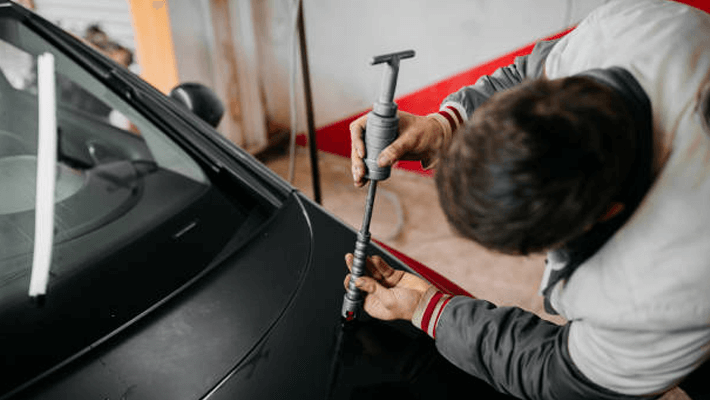
Body repair can be done in a variety of ways, depending on the type and extent of the damage. Some common methods include:
Dent repair: Minor dents and indentations can often be repaired using a process called paintless dent repair. This involves massaging the metal from the back of the tooth back to its original shape.
Scratch repair: Scratches can be repaired by sanding the damaged area, applying a primer, and then repainting the area to match the original color.
Rust repair: Rust can be repaired by removing the rust, applying a rust inhibitor to the metal, and then repainting the area.
Frame repair: If the vehicle’s frame is damaged, it may need to be repaired or replaced. This may involve cutting the damaged section of the frame and welding it to a new part.
Panel replacement: If a panel is damaged, such as a fender or door, it may need to be replaced. This may include removing the damaged panel and welding a new one.
Body repair is an important aspect of maintaining a vehicle’s safety, performance and appearance. It is usually done by professional technicians with specialized knowledge, tools and experience. It can be a time consuming and costly process

How is Body Repair Done?
Body repair is a complex process that requires specialized knowledge, tools and experience. The specific steps and methods used will vary depending on the type and extent of damage, but the general process is as follows:
Inspection: The first step in body repair is to inspect the vehicle and assess the damage. This includes taking pictures of the damage, measuring the extent of the damage, and determining the best course of action for repair.
Surface preparation: After the damage is determined, the vehicle surface is prepared for repair. This may include removing damaged parts, sanding the area, and cleaning the surface to remove any dirt, rust or debris.
Metal repair: If the damage to the vehicle involves metal repair, this is done by a special process called metal forming. This process involves using special tools such as hammers, movers and metal forming machines to return the metal to its original shape.
Body filling: If the damage is too much, body filling is applied to the area. This is a paste-like substance used to fill any nicks or gaps in the metal. The body inlay is shaped and flattened to fit the contour of the surrounding metal.
Sanding and priming: After metal repair and body filling is complete, the surface is sanded to create a smooth surface. A primer is then applied to the surface to create a smooth surface for the paint to adhere to.
Painting: After the primer dries, the surface is ready for painting. Paint is applied using a spray gun, roller or brush. Several light coats are applied, allowing each coat to dry before applying the next.
Final Inspection: After the paint has dried, the vehicle undergoes a final inspection to ensure the repair meets quality standards.
It is important to note that the body repair process should only be done by trained professionals with the necessary knowledge, tools and experience. Improper body repair can damage the vehicle or adversely affect its performance and safety.
- Engine Mechanical Repair
- Periodic Maintenance
- Transmission Overhaul
- DSG Card Repair
- Mechatronics Repair
- Software Update
- Adaption
- Engine Overhaul
- Paint
- Body Repair
- Dent Repair
- Paintless Dent Repair
- Body Paint
- General Service
- Vehicle Performance Increase
- Turbo Overhaul
- Suspension System
- Paint Protection
- Original Spare Parts
- Roadside Assistance